English: Handwriting
Writing Intent Statement
By the time our pupils leave Year 6, they will be confident, purposeful and effective writers who can communicate clearly for a range of audiences and purposes. They will write across a range of genres, selecting appropriate form, structure and language. Pupils will demonstrate secure transcription skills, including spelling (phonics, morphology and etymology), handwriting, punctuation and grammar, and will use ambitious vocabulary and cohesive sentence structures to create impact.
Through a clear writing process of planning, drafting, evaluating and editing, pupils will develop stamina, accuracy and independence. They will draw on reading, speaking and high-quality models to refine their work and take pride in presentation. By the end of Year 6, our pupils will see themselves as writers—equipped with the knowledge, skills and confidence to communicate effectively in secondary education and beyond.
Policy
The policy for this subject can be found on our main policy section of the website.
National Curriculum
Useful Websites
National Handwriting Association (https://nha-handwriting.org.uk/handwriting/help-for-parents/) - Help for Parents/Carers website provides a wealth of information relating to the importance of handwriting, how to support your child's handwriting and what to do if you think there are some difficulties.
NHS East of England (https://nha-handwriting.org.uk/handwriting/help-for-parents/) - This page contains a lot of information about handwriting.
NHS East of England (https://cambspborochildrenshealth.nhs.uk/services/cambridgeshire-childrens-occupational-therapy-service/sitting-position-and-posture/) - This page supports understanding around children's sitting position and posture. When children are writing, we want them to be sitting in the position shown below.

Oxford Owl Handwriting (https://home.oxfordowl.co.uk/english/primary-handwriting/) - This website gives some clear tips around supporting children's handwriting.
Pink Oatmeal Instagram page (https://www.instagram.com/pinkoatmealblog/) - This Instagram page gives a lot of ideas to support, improve, and develop children's gross and fine motor skills, as well as balance and stability.
Subject Progression Documents
How can I help my child in this subject?
You can support your child’s handwriting development at home in simple and positive ways. At Benjamin Hargreaves, we teach handwriting through the Kinetic Letters approach, which focuses on developing strong bodies, correct letter formation, pencil grip and writing fluency.
You can help by:
Encouraging strong bodies for writing
Good handwriting starts with strong posture and core strength. Activities such as climbing, balancing, drawing, colouring, Lego, playdough and outdoor play all help develop the muscles needed for writing.
Supporting correct letter formation
Your child learns letters using consistent formation language in school. Encourage them to start letters in the correct place and take their time rather than rushing. If you are unsure how a letter should be formed, please speak to your child’s class teacher so we can support your child using the same approach.
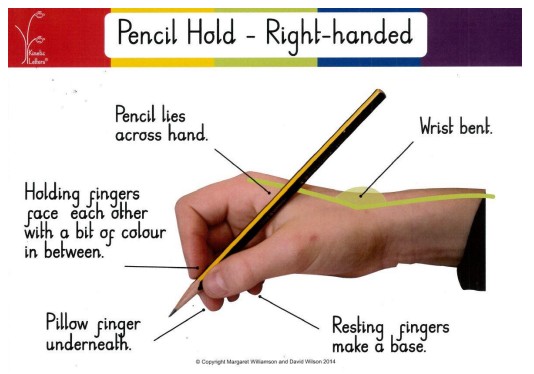
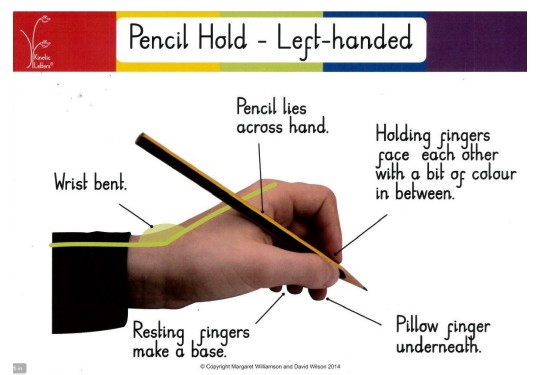
Checking pencil grip and posture
Help your child to:
sit upright with both feet on the floor
hold their pencil using a comfortable tripod grip
slightly tilt their paper (upwards for right-handed writers and downwards for left-handed writers)
Small adjustments can make a big difference to handwriting comfort and control.
Practising little and often
Short practice sessions of 5–10 minutes are more effective than longer sessions. Praise effort and improvement to help build confidence.
Letting us know if your child finds handwriting difficult
Please speak to your child’s teacher if your child:
avoids writing
complains their hand hurts
struggles to remember letter formation
tires quickly when writing
Working together helps ensure handwriting becomes fluent, comfortable and automatic so children can focus on their ideas when writing.